Pages

Showing posts with label branding. Show all posts

31 May 2011

The Blackberry boys: A failed repositioning strategy in the mobile phone market

Blackberry used to be synonymous with corporate -workhorse devices known for security and reliability . But the iPhone and Android smart phones with large app stores look like the best business models in the fast moving telcom industry. My estimate is that Blackberry has  lost the battle to iPhone and Android market. (The chief marketing officer Keith Pardy has left the company in mrch 2011. Not a good sign.)

People do not want an affordable corporate mobile phone, they rather want a sexy new one. No matter if you are corporate or not. The competitive advantage of Blackberry in the corporate world has gone and Blackberry is not sexy enough to compete in a consumer market. That is why they are forecd to start a world wide repositioning strategy, downgrading the brand image by offering it to consumers.


Repositioning Blackberry
In South Africa Blackberry is repositioning the brand as a consumer and business brand instead of only a corporate brand. They have a 4% mobile phone market share, but consumer intention to buy a blackberry is high.  Suggesting a strong growth the next period. At least according to Rudolf Muller in http://mybroadband.co.za/news/cellular/19363-why-blackberry-rules-in-sa.html If this approach will work remains too be seen.


In India the Blackberrie mobile phone brand also follows a repositioning strategy . The youtube viral movie (sort of bollywood style) is nice to watch.

How effective is the repositioning strategy?
A critical review of this move by kaustav sengupta
http://ingene.blogspot.com/2010/10/we-are-blackberry-boys-blackberry-is.html
If moving to a mass market and losing the elite image is a smart move of blackberry remains too be seen. It can be seen as a downgrading. It could dilute the value of this brand and the elite will no longer use Blackberry. They will switch to the next big thing. Blackberry will have difficulty competing against mass market mobile phone brands and app platforms like Iphone and android based phones.

As the brand grows there is always that temptation to make some more bucks by repositioning your brand and targeting the unconventional prospects. Many brands fall prey to it and most of them fail, because one thing in a human brain can occupy one association at a time, in most of the cases. Going against this basic law about how humans percieve and then act and react leads to so many failures in re-positioning attempts by brand managers across the globe. Blackberry is trying to do something very "cheap" in terms of re-positioning a brand; just a communication facade and wrap up to enforce the Boy thing. It might give them some more boys and girls singing to their tune but more importantly and more likely, it can take away that loyal class of Executives which build the brand Blackberry.This is not at all an impressive move by the strategists and brand people at RIM."...


Blackcherry, an indian Blackberry clone.
This BlackBerry rip-off is available to you at just INR 2799. (around $60,-)
Features: Dual SIM, Dual Battery, Dual Memory Card Slot


If your brand is copied you must have been good. But I doubt how long this clone will be around considering the downgrading of the Blackberry brand.


http://techcrunch.com/2010/06/28/rim-sexy-blackberry/

http://online.wsj.com/article/SB10001424052748703580004576180721135993118.html

10 March 2011

Lecturing during the International Week at the University of Katowice in Poland


Recently I had the opportunity to lecture at the University of applied sciemces in Katowice in south west Poland. Together with 11 collegueas from different countries we gave lectures centered around the theme Internet Communication Management My topic was "building brands on line". 4 student groups consisting of 4 students each had to choose an interesting consumer product and develop an online marketing communication plan. Considering they were mainly first year students and had no experience with marketing they produced some really good results. The students were surprisingly good at english and worked really hard to achieve the best results. Working in groups and immediately applying the theory in a practical assignment was something completely new to the Polish students. They were really enthousiastic about this form of teaching because it allowed them to work in groups and discuss pro's and con's among each other. The evaluations were really very good; 90% would recommend this course to other students. You can find the results of their work on their blogs and judge for yourself.


Iphone
Nissan quashqai 
3D tv Panasonic
m&m's 

Besides lecturing we had time for a very nice social programm including a visit to the town hall and a meeting with the major. Who gave an impressive presentation of the growth and entrepreneurial spirit of the region around Katowice. Several Western multinationals have a subsidiary in the Silezian region. The unemployment rate is below 3,5%. Which made me realize I had to adjust my perception of this region.

All lecturers and the international team during the visit of the town hall of Katowice.  


I was surprised by the exceptionally good promotional coverage of the international week.
The trailer at the top gives a nice example of how universities can promote important events in a modern way with social media.  Facebook, Youtube picassa all modern media were used to communicate the story of the international week. 
If you are interested check out the following websites.

18 February 2011

Farewell facebook

The growth of facebook is fenomenal. The use of facebook in our daily life has something articicial. In my daily work as a lecturer i see that some students are afraid to pick up the phone or to talk real life to somebody else. This briljant short movie illustrates the alienating effect of facebook.

Marketeers should be aware of these effects and the added value of being connected artificially.

13 January 2011

Battle of the imported beer brands: Heineken strikes back with brilliant campaign

Every beer drinker is convinced he can taste the difference between his favorite and other beers. The beer industry knows this is not true. Constant product / taste quality, good distribution, distinctive positioning supported by solid online and off line communication campaign does the trick.

In the USA there is a battle going in the imported beer category. Corona, the imported mexican beer, has "beer on the beach" positioning.


The Corona Beach from Big Spaceship on Vimeo.


It is under attack from Dos Equis with a brilliant "the most interesting man " campaign. Last year this campaign scored high on the viral video charts.


Advertising agency Wieden and Kennedy has developped a very appealing viral for Heineken.
They owe much to the campaoign of Dos Equis but gave it a modern and more refined twist in tune with Heineken´s positioning as a premium European import beer.  For people with a more cosmopolitan urban style.  Heineken shows correct way of entering a party.


Interesting to see what this new marketing campaign will do for sales and market share of the Heineken brand in the USA.


Source:
http://adage.com/digital/article?article_id=148178

11 October 2010

Engaging readers in the digital age

An interesting presentation about the strategic challenges internet poses for publishers. Authors can now build up their own audience and  publish without publishers. With all the possiblities in the social media publishers run the risk of becoming obsolete in the book publishing proces. Some interesting solutions from goingsocialnow at a keynote presentation at digital book world.


engaging-readers-in-the-digital-age?

15 September 2010

Country of origin effect

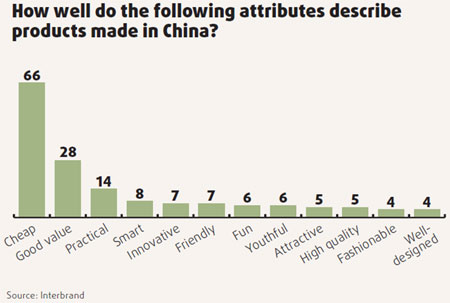
If you are producing high quality products in China you will have a hard time beating the low cost low quality perception. This strong negative "country of origin" effect is shown in a research by Interbrand consultancy.

Chinese companies must improve their quality and brand image to gain a competitive edge in the global arena, according to a recent survey by London-based Interbrand Consultancy. The “Made-in-China” survey interviewed over 700 business professionals on their perceptions about products made in China and the potential for Chinese brands going overseas. The survey revealed that Chinese brands were unable to cash in on the Olympics goodwill largely due to the tainted milk powder scandal. “Products made in China continue to represent the image of cheap price but low quality with safety problems,” the survey said.


http://nation-branding.info/2009/01/14/made-in-china/

How to change a good advert into a bad one with 10 rules

The proces by which a good advertising changes into a bad one.
Simply apply all the rules of good advertising without bearing in mind the effect on the impression on the viewer. During the proces you lose sight of the origial big idea to visualize the intended positioning.
An outdated example, but this kind of advertising is still widespread.


14 September 2010

Top ten reasons why BP’s advertising is a disaster

An interesting article by Simon Mainwaring on corporate reputation.

Credit: AP

BP’s handling of the Deepwater Horizon disaster demonstrates a lack of understanding as to how technology has changed the consumer marketplace. Their PR efforts have effectively pitted traditional media (such as TV and newspaper ads) against social media (such as the Boycott BP page on Facebook that has received close to a million ‘Likes’ or the BP logo competition run by Greenpeace). Not only does this mean that their ad spend on traditional media is largely ineffectual, but it allows the negative conversations around their brand to continue unresolved.

If a brand wants to influence consumer opinion within this social ecosystem it must play by a set of rules seemingly foreign to BP – transparency, authenticity and accountability. Social networks allow people to bypass traditional media outlets, talk among themselves and come together around shared values. Ecological damage on such a historic scale tapped into our shared concern for the ocean, its marine life, and the planet we leave for our children, and so social media amplified consumer outrage around the world.
...... 

......
A full page newspaper ad (or ten) does not disperse the damage done to the lives of fishermen and their surrounding communities devastated by the spill who are now struggling under the weight of consumer concerns over their catches. A TV ad (or ten) does not restore the generations of marine life lost, nor repair the damage done to the Gulf’s ecosystem. A search ad (or ten) does not change the mind of a single consumer unless BP fundamentally changes its behavior.

Read more at http://simonmainwaring.com/future/top-ten-reasons-why-bps-advertising-is-a-disaster/

How do consumers engage with brands in an increasingly digital world?

How do consumers engage with brands in an increasingly digital world?
This marks a significant shift in focus for the research of Razorfish. Their past studies have been almost exclusively concerned with charting how consumer behavior adapts to advances in Internet technology and web services.
In this report Razorfish is broadening their attention toward exploring how consumers interact with brands online.
What does the future hold for brands when everything is just a click away? If consumers really are in control, what can we learn from their interaction with brands today?

Highly recommended

Positioning luxury car brands

A nice example powerpoint on positioning 4 luxury car brands from down under.


Positioning luxury car brands (Bmw, Mercedes Audi, Lexus )